Here is the short version: Curaçao works almost any month of the year. The island sits in the far southern Caribbean, below the path that most Atlantic storms take, and it stays warm, sunny and dry across the calendar. If you want the most dependable weather, come between December and April. If you would rather save money without losing much sunshine, aim for the shoulder weeks of late May to June, or September into October.
Which month suits you really depends on your priorities: peak sunshine, the lowest room rates, the buzz of Carnival, or the calmest water for diving. The month-by-month breakdown below should help you match the season to your trip. And because nearly everyone arrives at Hato (Curaçao International Airport, CUR), there is a short note at the end on what that means for your first day.
The climate: warm, dry and rarely in a storm's path
Curaçao lies about 60 km off the coast of Venezuela, well south of the track most Atlantic hurricanes follow. The official hurricane season runs from June to November, yet the island is only very rarely affected, which is part of why it stays busy while other parts of the region are watching the forecast. It is also one of the driest islands in the Caribbean, collecting only around 500 to 600 mm of rain a year, and most of that arrives as short afternoon showers rather than washout storms.
A steady easterly trade wind blows almost every day. That breeze does a lot of quiet work. It keeps the heat comfortable when the sun is fierce, and it leaves the leeward south-west coast calm and easy to swim.
How hot does it get?
Warm, and unusually consistent. Daytime highs sit near 31°C for much of the year and rarely drop far below 29°C even in the cooler winter months, while nights settle to a pleasant 24 to 26°C. June to September is the hottest stretch, and December to February feels freshest, when the trade winds do the most to cool things down. Sea temperatures hold around 26 to 28°C all year, so the water is always inviting.
The driest and wettest months
February to June is the driest run, when many months see under 25 mm of rain. The wettest weeks fall between October and December, peaking in November, though even then the totals stay modest by Caribbean standards and showers tend to pass quickly. Chasing guaranteed sun? The spring window is the safest bet. Happy to trade the odd shower for lower prices? Autumn works well too.
Beaches and diving: when the sea is calmest
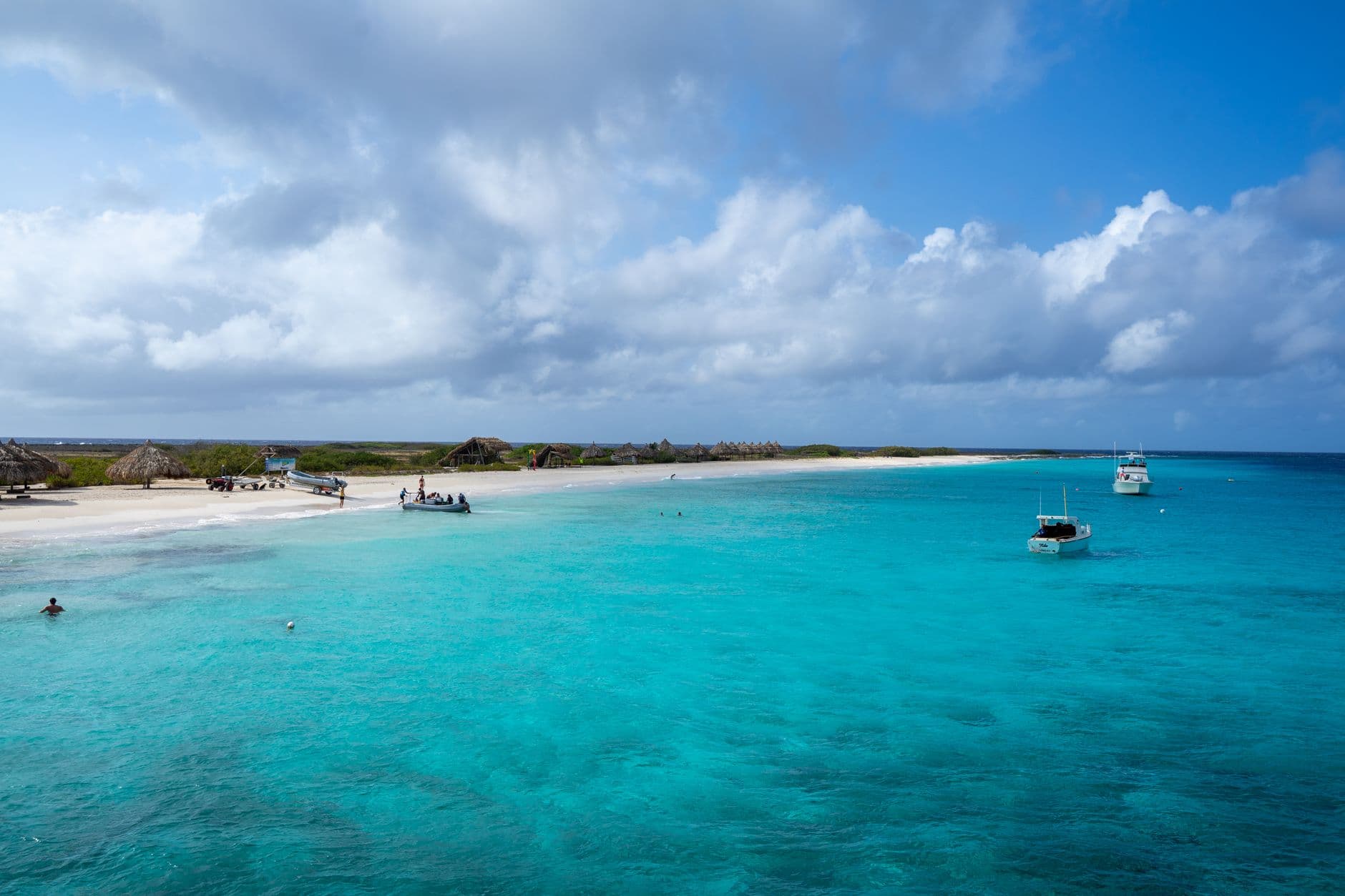
This is a year-round beach and dive destination, thanks to that dry, sheltered south coast. The calmest, clearest water usually arrives in autumn, roughly September to November, once the trade winds ease. Divers and snorkellers prize those weeks for visibility on the island's famous shore reefs. The breezier spring is still fine for swimming on the leeward beaches, though you will notice more wind on the exposed eastern side. Whenever you visit, the turquoise coves of the west end are worth the drive, as our guide to the best beaches in Curaçao explains.
Crowds, prices and Carnival
High season runs from mid-December to mid-April, when visitors from the northern hemisphere come to escape the cold. You get the finest weather but also the steepest prices and the busiest beaches, so book flights and hotels well ahead, especially around Christmas, New Year and Easter. From May to November the low season pulls room rates down by roughly 30 to 40 per cent, and late May to June plus September to October strike the sweetest balance of sunshine, space and savings.
One event is worth planning around: Carnival, the island's biggest celebration. It builds through January and peaks in February, just before Lent, when the Gran Marcha (Grand Parade) winds through Willemstad. In 2027 the Gran Marcha falls on Sunday 7 February, with the farewell parade on Tuesday 9 February and Lent beginning on 10 February. The atmosphere is infectious and the costumes spectacular, but rooms sell out and prices climb, so reserve early if your dates overlap.
Month-by-month quick guide
- December to February: Peak season at its finest. Warm, breezy and dry, with festive crowds and Carnival building. Book ahead.
- March to April: Still high season; reliably sunny, with Easter the busy spell.
- May to June: The sweet spot. Hot and dry, noticeably quieter, and prices start to ease.
- July to August: The hottest months, busy with European holidaymakers; clear, warm sea that is ideal for the water.
- September to October: Quietest and cheapest, with calm seas for diving and the first short showers.
- November: The wettest month, but the showers are brief and prices low, and the weather improves late on.
| Period | Weather & sea | Crowds & prices | Verdict |
|---|---|---|---|
| Dec to Apr | Warm (around 31°C), breezy, driest; calm sea | High season, busiest and priciest | Best weather; book well ahead |
| May to Jun | Hot, dry, sunny | Shoulder; rates easing | Sweet spot for sun and value |
| Jul to Aug | Hottest; warm, clear water | Busy (summer holidays) | Great for the water; hot at midday |
| Sep to Nov | Warm; calmest seas; brief showers (wettest in Oct and Nov) | Lowest crowds and prices | Cheapest, and best for diving; slight shower risk |
| At a glance | Curaçao |
|---|---|
| Average high / low | Around 31°C / 25°C, steady year-round |
| Sea temperature | About 26 to 28°C all year |
| Annual rainfall | Around 500 to 600 mm, one of the driest Caribbean islands |
| Driest months | February to June |
| Wettest months | October to December (peak in November) |
| Hurricane risk | Below the usual storm path; very low |
| Peak season | Mid-December to mid-April |
| Best value | Late May to June, and September to October |
Whenever you decide to come, your trip begins at Curaçao International Airport (CUR), also known as Hato, about 12 km north of Willemstad. It is a short hop into town: see getting from Curaçao Airport to Willemstad and the beaches for your options, where to stay near the airport if you land late, and what to do on a layover when you only have a few hours. Ready to explore once you land? Browse our pick of things to do in Curaçao.
This is an independent airport guide, not affiliated with the official airport. Weather and prices are approximate and seasonal (June 2026); confirm current forecasts and Carnival dates with official sources such as Curaçao Tourism and Curaçao Karnaval before you travel.